

How Can Outpatient Addiction Recovery Help Without Inpatient Rehab?
MedSave Clinic in Columbus, OH, Dr. Randall Colucci, MS, MPH, DO, provides outpatient addiction recovery services to help you achieve lasting sobriety without the need for inpatient rehab. Our outpatient program offers flexibility while still providing the same level of care and support as inpatient options. With medication-assisted treatment, counseling, and regular monitoring, we offer a personalized approach to help you overcome addiction. For more information, contact us or schedule an appointment today. We are conveniently located at 246 E Campus View Blvd, Columbus, OH 43235.
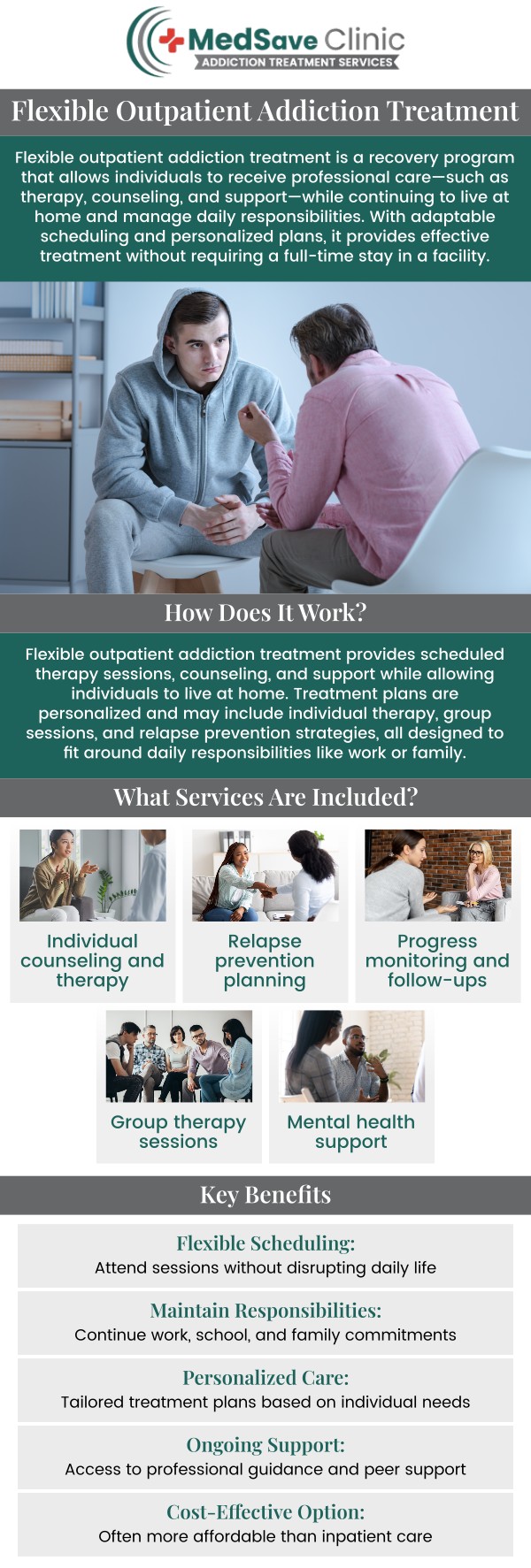
Table of Contents:
How can outpatient addiction recovery help without inpatient rehab?
Who may benefit from outpatient addiction recovery instead of inpatient rehab?
Can outpatient addiction treatment fit into work, school, or family schedules?
What services are included in outpatient addiction recovery?
How Does MedSave Clinic Help Patients With Outpatient Addiction Recovery Without Inpatient Rehab?
Outpatient addiction recovery allows individuals to receive treatment for substance use disorders while continuing to live at home and maintain their daily responsibilities. Unlike inpatient rehab—where patients stay at a residential facility around the clock—outpatient programs provide structured support during scheduled visits. This model can be just as effective for many people, especially when combined with counseling, medication‑assisted treatment (such as Suboxone), and personalized recovery planning.
Outpatient care helps with:
• Maintaining normal routines — you can continue working, going to school, and fulfilling family roles
• Applying recovery skills in real life — you practice coping strategies in your everyday environment
• Reducing barriers to treatment — no need to relocate, pause responsibilities, or disrupt your life
• Saving on costs—outpatient services are generally more affordable than 24/7 residential care
With consistent support, accountability, and access to evidence‑based therapies, outpatient recovery helps patients build sustainable recovery habits without a prolonged stay in a rehabilitation facility.
Outpatient recovery isn’t right for everyone, but it’s often a strong fit for people who:
• Have stable living environments: If you have a safe, supportive home and aren’t surrounded by heavy substance use, outpatient care can help you stay grounded while in recovery.
• Are motivated and committed to change: Outpatient programs require active participation — attending appointments, engaging in therapy, and following treatment plans.
• Have mild to moderate addiction: Patients whose addiction is not severe or complicated by medical or psychiatric crises often do well with outpatient care.
• Need to maintain daily responsibilities: If work, school, or family obligations make long‑term residential treatment impractical, outpatient care allows you to fulfill those roles while receiving support.
• Have a strong support system: Recovery can be strengthened when family or loved ones are involved positively, providing encouragement outside clinic visits.
Outpatient treatment can also serve as a step-down program after inpatient rehab—helping patients transition back to daily life with structured support.
Absolutely—one of the biggest advantages of outpatient treatment is flexibility. Programs are designed to accommodate patients with responsibilities outside of treatment.
At outpatient clinics like MedSave Clinic, services may be scheduled.
• Early in the morning before work or school
• In the evenings after daytime obligations
• On weekends for patients with weekday commitments
This scheduling flexibility allows you to:
• Attend therapy without missing work
• Balance family and recovery care
• Continue education while making progress in treatment
Because outpatient programs are structured around your life—rather than requiring you to put your life on hold—they can be especially useful for working adults, parents, students, and anyone who cannot commit to inpatient stays.
Outpatient addiction recovery includes a range of services that work together to support long‑term recovery. These typically include:
1. Individual Counseling: One‑on‑one sessions with a trained therapist help you explore triggers, develop coping strategies, and work through emotional barriers to recovery.
2. Group Therapy: Group settings provide peer support, shared experiences, and encouragement from others facing similar challenges.
3. Medication‑Assisted Treatment (MAT): Medications like Suboxone can reduce cravings and withdrawal symptoms, making recovery more manageable and sustainable.
4. Behavioral Therapies: Cognitive Behavioral Therapy (CBT) and other evidence‑based approaches help change patterns of thinking and behavior related to substance use.
5. Education and Skill Building: These sessions teach relapse prevention, stress management, communication skills, and healthy lifestyle habits.
6. Family Support: Family counseling helps rebuild relationships and creates a supportive home environment for recovery.
7. Case Management and Referrals: Care coordination helps patients access additional medical, mental health, or social services as needed.
Outpatient addiction recovery is not limited to one type of service — it’s a comprehensive care plan tailored to each individual’s needs.
At MedSave Clinic in Columbus, OH, Dr. Randall Colucci, MS, MPH, DO, specializes in providing outpatient addiction recovery that is individualized, supportive, and integrated with mental health and medical care. Rather than requiring patients to leave their lives behind, we help you navigate recovery while living your daily life.
Here’s how we support outpatient recovery:
• Personalized Assessments: Every patient begins with a thorough evaluation, including medical history and addiction severity. This allows us to create a customized outpatient plan that fits your unique situation.
• Medication‑Assisted Treatment (MAT): We offer Suboxone and other MAT options as part of treatment when appropriate. These medications help reduce cravings and withdrawal symptoms, making outpatient recovery more sustainable and effective.
• Regular Clinical Monitoring: We schedule consistent follow‑ups to monitor progress, adjust medications, and address emerging needs. This ongoing connection helps keep you accountable and supported.
• Integrated Therapy Options: We coordinate counseling, behavioral therapy, and peer support that complement MAT. Whether in individual sessions or group formats, these services reinforce healthy coping skills and emotional resilience.
• Education and Life Skills: Our team provides education on relapse prevention, stress management, and recovery planning — tools you can use in your everyday life.
• Flexible Scheduling: We understand that patients have responsibilities outside of treatment. Our scheduling options help you stay on track without sacrificing work, school, or family time.
• Ongoing Support and Resources: Recovery is an ongoing process. We provide continuous support, connections to community resources, and encouragement long after the initial stages of treatment.
Outpatient addiction recovery offers an effective alternative to inpatient rehab for many people. It supports recovery within your daily life while providing the structure, medication support, and therapeutic guidance needed for lasting change. At MedSave Clinic, we help you navigate this journey with compassion, expertise, and practical support every step of the way.
If you’re ready to explore outpatient addiction recovery, our team is here to help you begin. For more information, contact us or schedule an appointment today. We are conveniently located at 246 E Campus View Blvd, Columbus, OH 43235, serving patients from Columbus OH, Flint OH, Galena OH, Powell OH, Westerville OH, and the surrounding areas.
Check Out Our 5 Star Reviews


Additional Services You May Need





 Send Text
 How May I Help You?